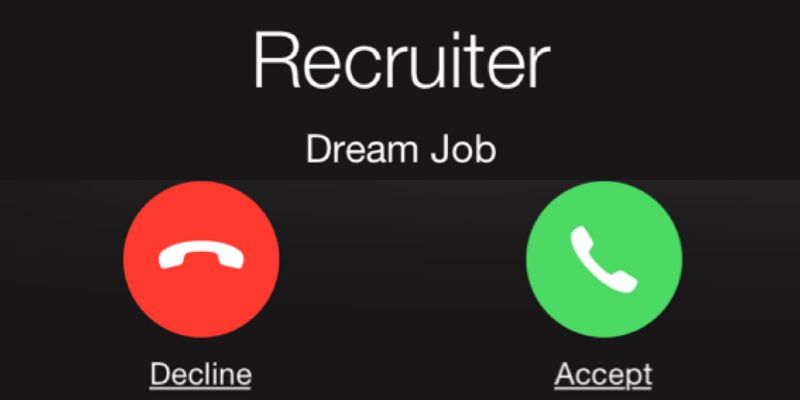
You have probably applied to various job opportunities via e-mail, social media, or websites and have never heard anything back. It’s frustrating. When you finally do get a call, most likely at the most importune time, they start asking you questions about yourself and your experiences. The reality is that from this point on, you still have several more hoops to jump through before you get a face-to-face interview.
Too often, well-qualified candidates trip themselves up at the initial phone interview stage. As this is a vital part of the recruitment process and it allows the recruiter or hiring manager to know what type of person you are and how you will deal with their customers, it’s essential to impress.
As the candidate market grows consistently, the job of a human resources consultant, talent acquisition specialist or recruiter is to have a short phone interview with his/her candidates and qualify them to see who should move into the next phase. At this stage, you will likely deal with someone in human resources or a recruiter whose role it is to pave the way for the hiring manager to decide which candidates to bring in for a more serious discussion. He or she is tasked with gaining basic information about multiple candidates and making initial judgments about personality, temperament, communication style, salary expectations, and so on.
If you haven’t done so already, you should be prepared for the initial call. Below is a list of questions and suggestions on how to answer them.
Question: “Tell me about yourself”
While it is likely that you’ve got your story all bottled up inside, you may not want to get every detail of your life history and capabilities out there all at once. Aim for the interview to last less than half an hour. Contain the urge to tell them a day-by-day account of your life history; rather, keep it brief, and concise and consider the topics below.
“Why did you leave this job?”
Be prepared to explain at least the last couple of transitions, which will give the interviewer an idea of your career progression. Make sure you are clear and to the point. Be sure you can provide suitable evidence, and let them know who will be your referees. Do not provide names or contact details until after you have provided the reason for leaving. As an example; you can say, “A member of senior management whom I reported to will be a referee.” This clearly shows that you can verify your story and that you left on good terms.
No matter the reason why you left, it’s important, to be honest, and forthcoming with your potential employer. If you left due to a medical reason, then advise them that you have obtained a medical certificate that clears you to come back to work.
“Can you tell me why you ….?”
Always be prepared to explain everything on your résumé. An experienced recruiter will be able to find any holes or points of concern on your resume. Don’t worry, this is not a negative thing; rather, it’s positive. By pointing out any concerns during the phone interview, the recruiter will be able to provide them with a suitable response, which will most likely not come up during your face-to-face interview. Just be prepared to give more detail, but don’t take too much time on any one answer. After a few sentences, ask: “Is this what you were after, or would you like me to go in a different direction or provide greater detail?”
Self-confidence
Your interviewer will be able to tell from your level of self-confidence, personality, and ability to communicate effectively from your phone interview. You need to build trust and communicate your knowledge and abilities from the ground up. Don’t rush your answers, and keep an even tone in your voice. But at the same time, show aspects of your personality.
Difficult Questions
Don’t get flustered when uncomfortable questions arise. Uncomfortable questions almost always rear their heads on a phone screen in one way or another.
- Tell me about your biggest weakness.
- What are your salary expectations?
- Where do you expect to be in five years?
- What do you know about our company?
- Why do you want to work here?
Numerous articles are available that deal with these and similar questions. Go into an interview expecting these questions and knowing your answers; you wouldn’t go into an exam without studying first. Review them, and practice your answers many times, but do not make them sound rehearsed.
“Do you have any questions for me?”
Do your homework and prepare great questions to ask the interviewer. You will likely be given the opportunity to ask questions. Use it to show your enthusiasm and knowledge of their company and industry. You can also ask about aspects of the job but never use this as an opportunity to ask about their process, start dates, salary, benefits, or anything else they can do for you.
Control, control, control!
Control your environment, as you may not always be home or at a quiet place during the call. If you are too distracted, then ask if you can call them back later, and make sure you set up a time before hanging up the phone. If you can speak, then make sure you are in control of the interview, You can do this by asking questions. Always be curious, as you can find out a lot from this initial phone interview that will help you for your face-to-face interview.
If you focus and remember these tips, success will follow. Good luck.
 Ricardo Barriga
Leave a comment